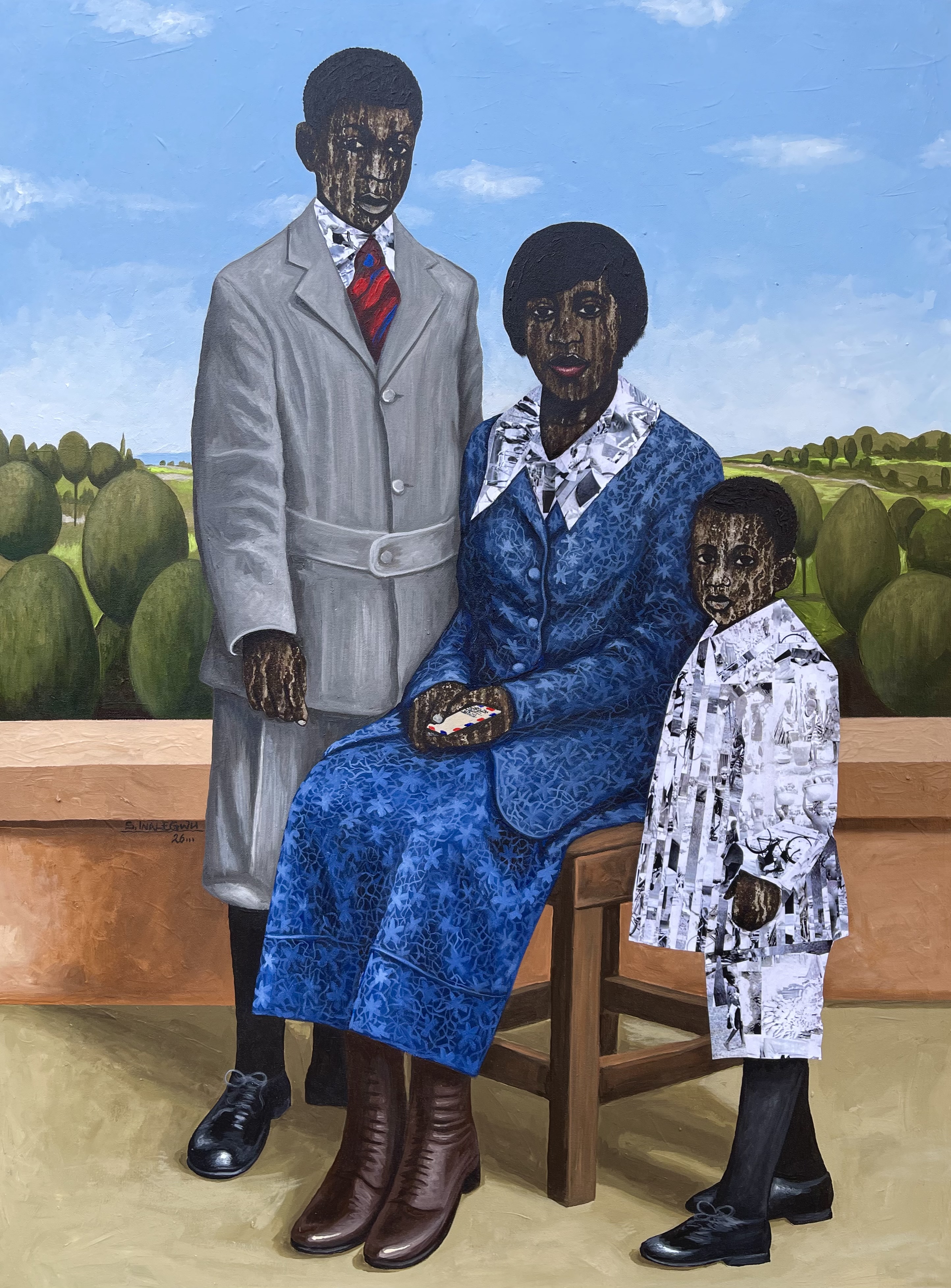
In Where We Belong, Samuel Inalegwu constructs a striking visual metaphor that collapses the boundaries between the human body and the natural world. Emerging from the form of a cultivated plant, the figure is neither fully concealed nor fully revealed—its fragmented presence suggesting a quiet negotiation between identity, environment, and
... belonging.
The composition is deliberate in its tension. The organic structure of the plant—rooted firmly in the earth—acts as both host and vessel, while the partially visible human figure introduces a psychological and cultural dimension. Inalegwu’s use of acrylic establishes a luminous, almost hyperreal surface, while charcoal introduces depth and fragility, reinforcing the duality between permanence and transience.
The work reflects on themes of origin, displacement, and adaptation. By embedding the human form within an agricultural context, the artist gestures toward cycles of cultivation—both literal and metaphorical. The figure becomes a product of its environment, shaped by unseen forces, histories, and inherited conditions. This synthesis evokes broader conversations around identity formation in postcolonial and global contexts, where belonging is often negotiated rather than inherited.
Inalegwu’s signature approach—merging anthropomorphic elements with carefully rendered textures—creates a visual language that is at once intimate and universal. The restrained yet evocative palette, punctuated by subtle tonal shifts, allows the viewer to focus on the conceptual weight of the image rather than spectacle.
Ultimately, Where We Belong is not a fixed answer but an open inquiry. It invites viewers to consider the conditions that define place, identity, and rootedness—asking whether belonging is something we inherit, cultivate, or continuously construct. Read More
Materials
Acrylic and charcoal on canvas
Certificate
Includes a Certificate of Authenticity